
A spreadsheet does not break, it rots quietly
A spreadsheet does nearly all of this, as long as you maintain it. What it does not do: fetch price indices country by country and month by month, keep conversions consistent, recognise the lines that come back every month on a statement, amortise a loan. And above all, stay correct two years later without attention. For one country, one currency and someone who enjoys keeping a spreadsheet, My Wealth Book adds little — better said than pretended otherwise.
What My Wealth Book does
Real return, not nominal
Every line is compared to the inflation of the right country, as a ratio rather than a subtraction. A flat is measured against its own country's prices, even when held from abroad. That is where a good many winning investments turn out flat.
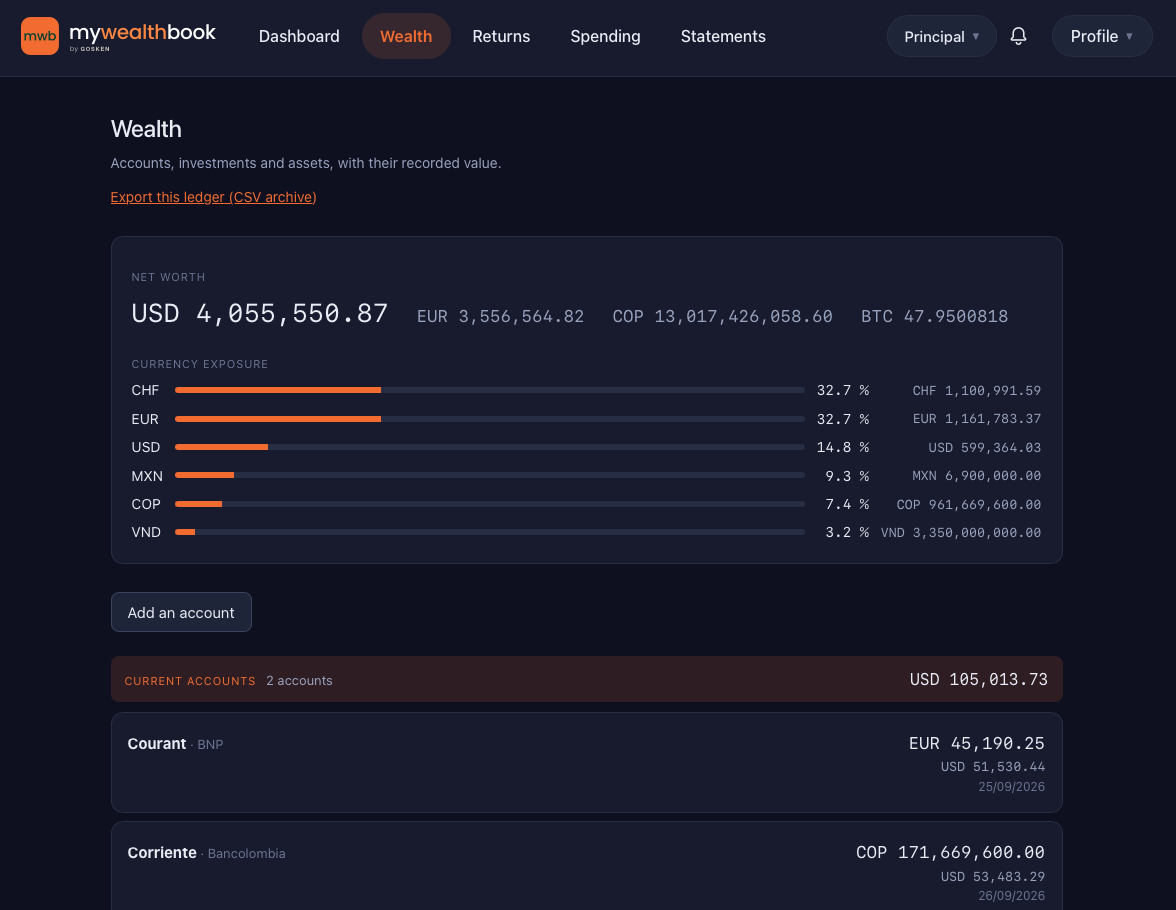
Multi-currency that does not lie
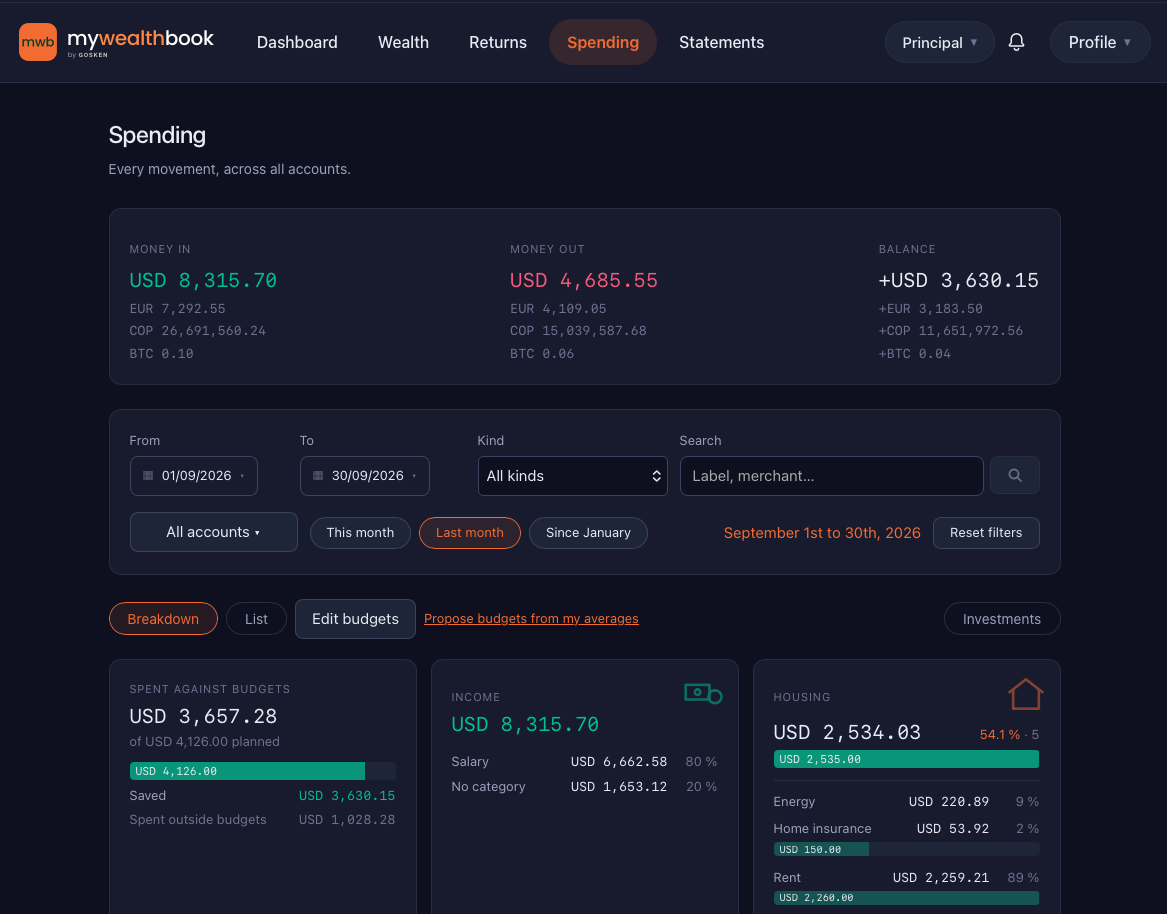
A line stays in its account's currency. What comes in on the other side in a different currency is entered, not computed: an ATM rate is never the official rate, and the gap runs into whole percent.
A loan understood, not endured
The monthly payment splits into principal and interest, the loan is attached to the asset it finances, and the screen shows what you really own: the asset's value minus the principal still outstanding.
Property treated as an asset
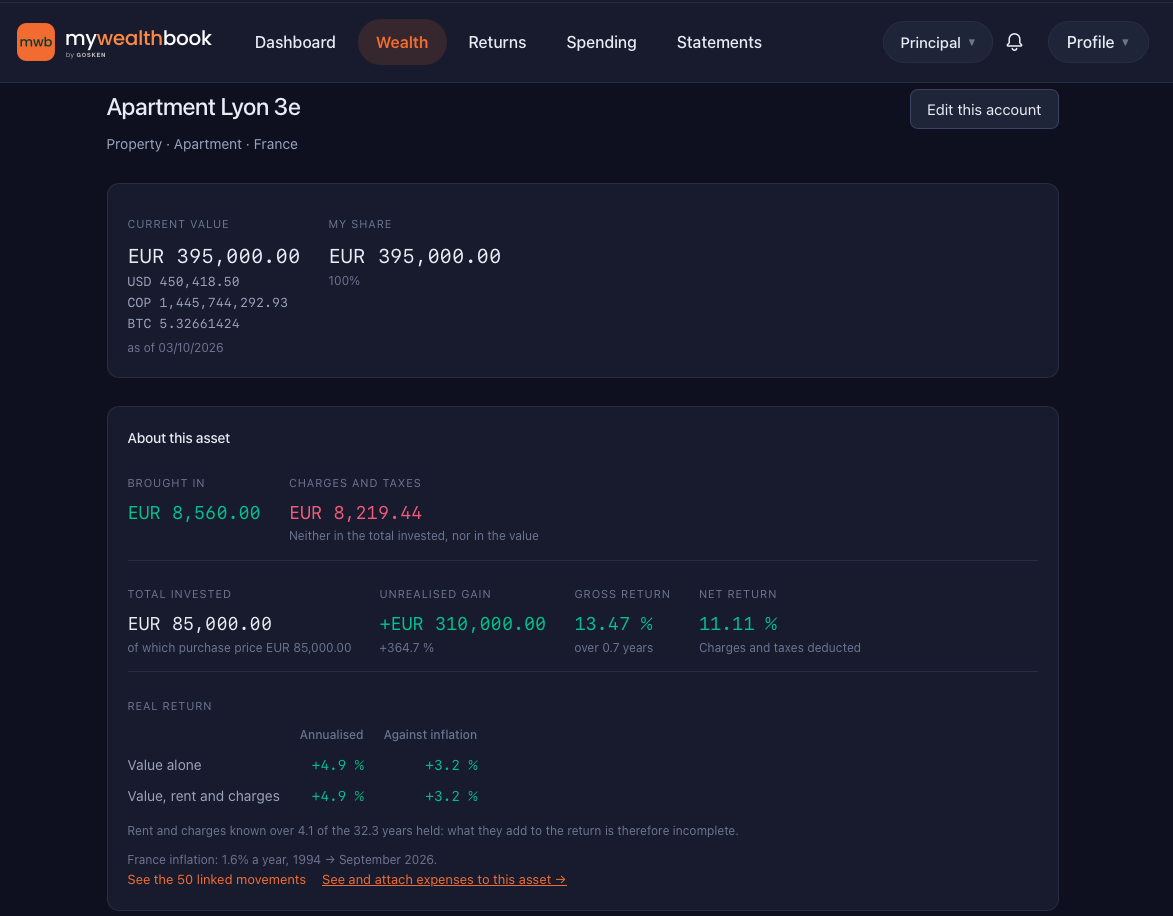
Purchase price, legal fees, work added, gross and net yield. And a value decided by the market, never by what you have spent on it.
Your accounts and movements
Accounts, readings, movements entered or imported from CSV, natures and categories, transfers matched between two accounts. Investments with their holdings, targets and thresholds.
A dashboard that compares
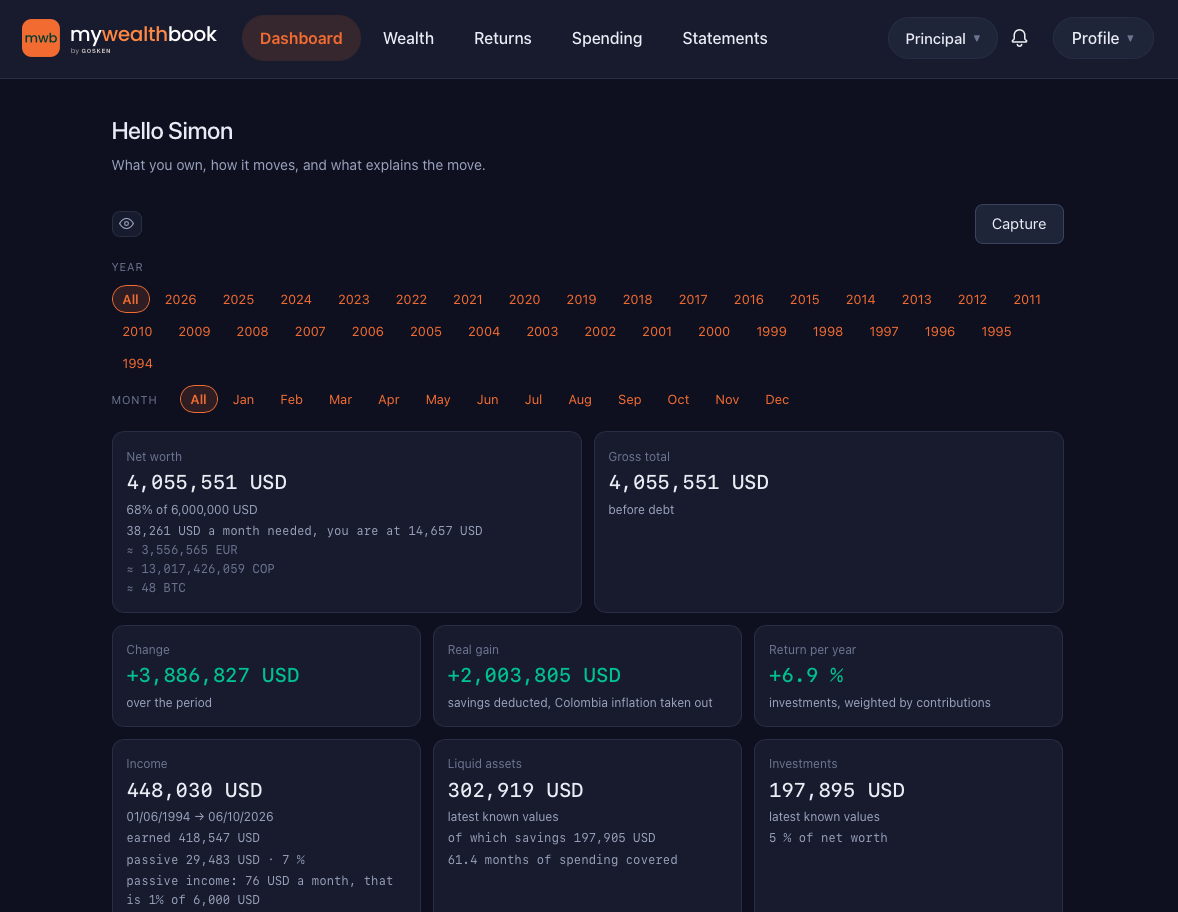
Net worth, liquid assets, passive income, and net worth against inflation. A flat and a brokerage account finally sit in the same column.
Several books, shared
Yours, and the ones shared with you. Three languages. Full export as JSON or as a CSV archive — and that archive can be read back: your data comes out whole, and can come back in.
An assistant that reads, and does not advise
Ask a question about your book: it answers with figures taken from the product, never invented, each with its currency and its valuation date. It tells you what is missing from the total instead of filling the gap. And it recommends no purchase, no sale, no reallocation — that is not a technical limit, it is the choice not to advise you about your money.
One asset, and what it really returned
An apartment is not just its value. It cost notary fees, it carries property tax and charges, it pays rent, and inflation eats away at all of it for thirty years. My Wealth Book attaches those movements to the asset, annualises them over the period they are actually known — and says so — then sets the result against the country's inflation and the rate on the loan behind it.
What it does not do yet
Better written here than discovered later:
- no direct bank connection: statements are imported as CSV or PDF, never through access to your bank;
- no live quotes: a holding is valued at the price in the imported file, or at a price you enter;
- no internal rate of return on property: it is computed on investments, not yet on an apartment;
- no exchange-rate history: an asset's return against its own country's inflation is right, but the all-currency total, and amounts spent in a currency other than the asset's, are converted at today's rates;
- no company accounting: a company is valued and counts towards your wealth, but its books are not kept here.
Who it is for
For someone whose wealth is spread across countries or currencies, and who wants one answer rather than six statements to reconcile. Not for someone with one account, one currency and a spreadsheet they enjoy keeping.
Two plans, the same access
One price, and it will not go up. What you pay today is what you will pay in two years.
- Accounts, assets and currencies without limit
- CSV and PDF statement import
- Real return, after inflation and exchange rates
- The assistant, answering with the product's own figures
- Full export of your data
30-day trial without a card, then a full refund within 14 days of the first payment. Reading and exporting stay free, even without a subscription.
Our trading journal, for trading accounts : My Trading Book.
Combined with My Trading Book
One subscription, one renewal date, one invoice — and less than the two taken separately.
A question? See our help page.